
Content Creators Step In to Clean Public Spaces Municipal Bodies Overlook
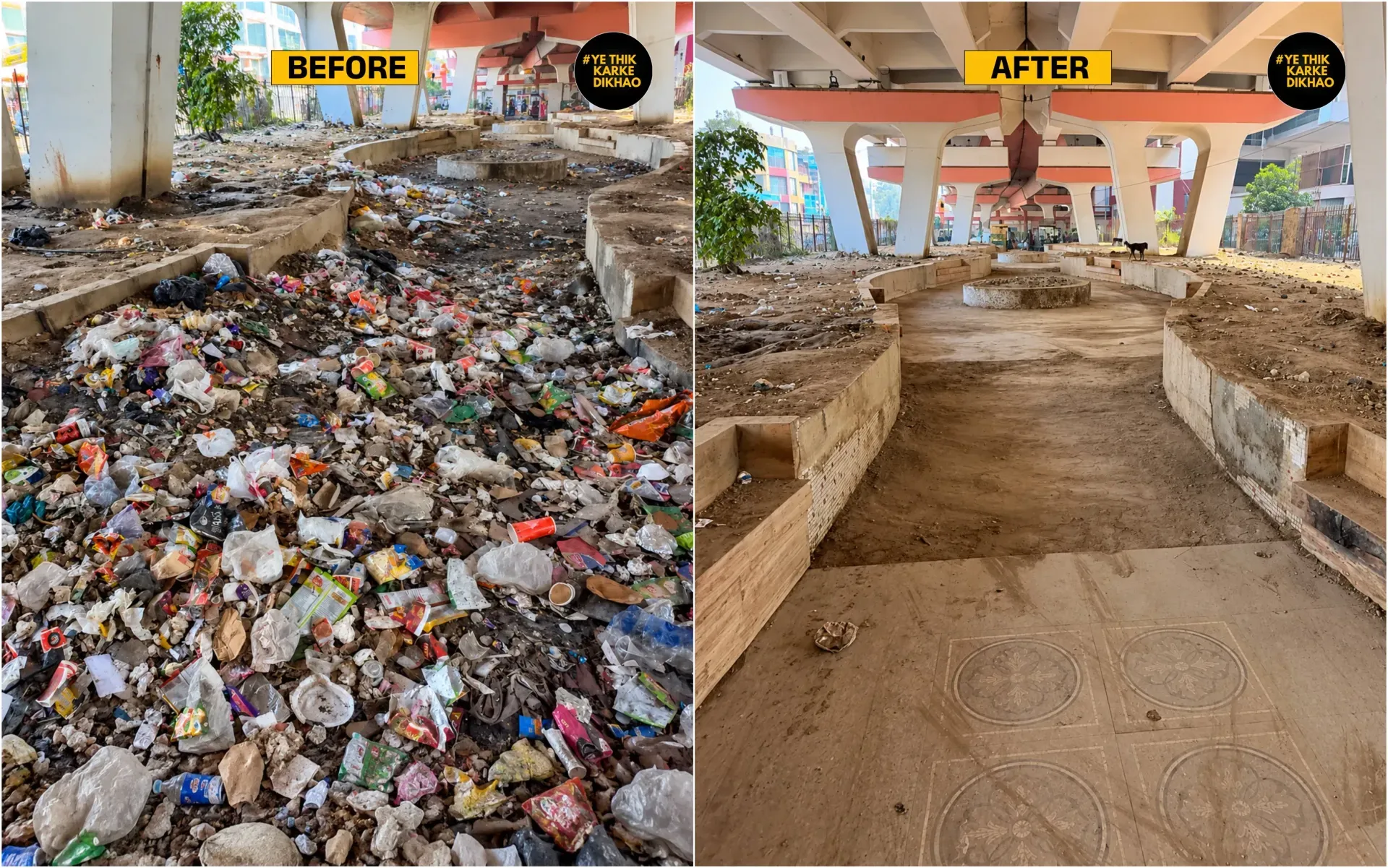
A set of before-and-after photographs circulating on social media shows a public area under a flyover or bridge transformed from a carpet of plastic waste, wrappers and debris into a largely cleared space. The post notes that content creators are performing the kind of work municipal corporations are paid to handle.
Such images are part of a wider pattern. Across cities, young creators and citizens have been sharing videos and photos of clean-up drives in neglected corners of public infrastructure. The activity often carries the spirit of the #YeThikKarkeDikhao campaign that gained traction earlier, where people highlight civic problems and call for visible action.
Municipal corporations remain the primary agencies responsible for sanitation, waste collection and maintenance of public spaces. Taxpayers fund these services. Yet persistent litter in many underpasses, footpaths and open areas continues to surface online, prompting individuals to pick up gloves and bags themselves.
Replies under these posts frequently point out that littering starts with ordinary citizens. Clean spaces stay clean only when people stop throwing waste. At the same time, the scale of rubbish that accumulates suggests gaps in regular sweeping, collection and enforcement by civic bodies.
For education, these moments carry clear value. Schools already include environmental studies and civic lessons in the curriculum. Real examples of young people taking ownership of shared spaces turn textbook ideas into lived experience. Teachers can use such stories to discuss personal responsibility, the cost of litter to health and flooding, and the difference between complaining online and acting on the ground.
Parents see the same videos and can talk at home about simple habits: carrying waste home when bins are missing, segregating dry and wet garbage, and respecting public property. Students preparing for competitive exams or simply growing up in India’s crowded cities absorb an important message that good citizenship is not only about voting or scoring high marks.
Some municipal bodies have begun recognising the reach of social media. In places like Surat, local authorities have involved content creators as cleanliness ambassadors to spread awareness more effectively among younger audiences. The approach acknowledges that short videos often travel farther than official notices.
The trend does not substitute for better systems. Still, regular collection, more bins, proper disposal facilities and accountability for contracted workers are critical. But seeing creators clean up a once-filthy stretch reminds everyone change can start with a few committed hands. These stories provide a practical starting point in classrooms and living rooms. Students who learn early on that public spaces are theirs are more likely to protect them later on.The photos of the clean-up may fade, but the debate they ignite about responsibility might not.

Written by
MonishMonish is an education writer covering exams, student rights, academic awareness, and other education-related topics, with practical guidance for students.