
Colleges With Scam Complaints in India Students Should Research Carefully
Colleges With Scam Complaints in India Students Should Research Carefully
College admissions in India have become extremely aggressive.
Students now see giant placement advertisements, scholarship promises, “limited seat” pressure tactics, celebrity endorsements, and counselors calling repeatedly after a single inquiry form submission.
For many families, the process feels less like education counseling and more like a sales campaign.
And once admissions happen, some students later report problems involving fee refunds, hidden charges, misleading placement claims, or unclear policies.
Important point though:
Not every complaint automatically means a college is guilty of fraud.
But verified public grievances, consumer complaints, regulatory notices, and UGC refund disputes clearly show that student frustration in higher education is growing.
What Students Commonly Complain About
| Complaint Type | Common Student Concern |
|---|---|
| Fake Placement Hype | Advertised packages not matching reality |
| Refund Issues | Delays or refusal after admission withdrawal |
| Hidden Fees | Unexpected hostel or exam charges |
| Misleading Advertisements | Inflated claims about rankings or recruiters |
| Approval Confusion | Students unaware of accreditation problems |
These complaints appear repeatedly across consumer forums, UGC grievance systems, court filings, and student discussion communities.
1. Refund Complaints Are Increasing Rapidly
Fee refund disputes have quietly become one of the biggest issues in Indian higher education.
According to data reported around the UGC Fee Nivaran Cell, thousands of fee-related complaints were resolved over recent years, involving crores in refunds. :contentReference[oaicite:0]{index=0}
Many disputes happen when students temporarily join private colleges while waiting for government counseling rounds. Once they secure another seat, they attempt withdrawal - and then refund problems begin.
Students commonly complain about:
| Refund Problem | Typical Situation |
|---|---|
| Delayed Refunds | Students waiting months for money |
| Large Deductions | Heavy “processing charges” |
| Hostel Refund Issues | Accommodation fees partially withheld |
| Unclear Policies | Terms hidden during admission |
UGC has repeatedly reminded institutions about refund guidelines and grievance mechanisms. :contentReference[oaicite:1]{index=1}
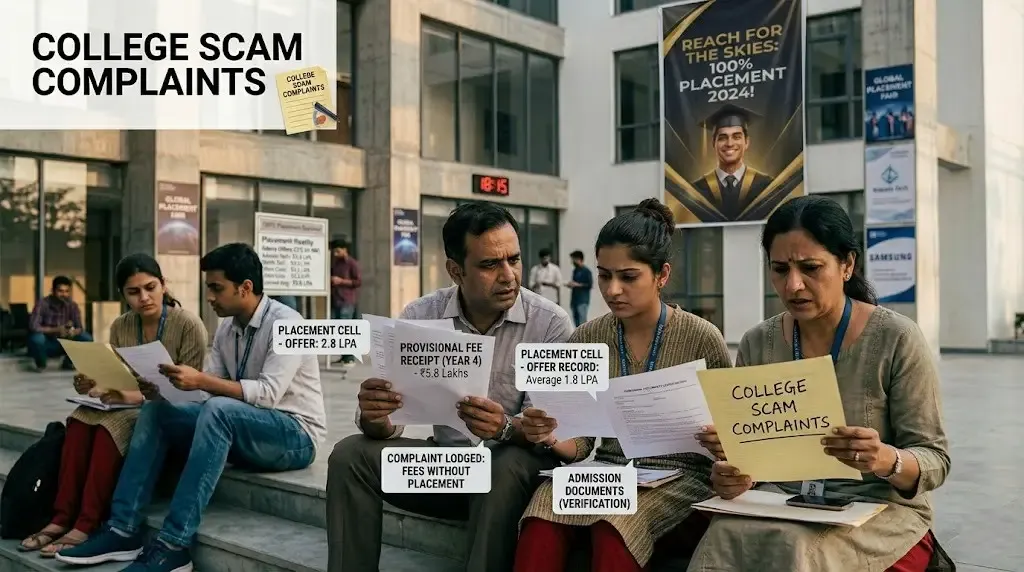
2. Fake Placement Claims Remain a Major Complaint
This is probably the most emotionally charged issue among students.
Some colleges advertise extremely high international packages or display logos of major companies everywhere during admission season.
Students later complain that those recruiters hired only a tiny number of people, came for internships instead of full-time jobs, or offered salaries far below expectations.
The biggest frustration usually comes from expectation mismatch.
Students and parents often assume glossy placement advertisements represent average outcomes when they may actually represent exceptional cases.
| Advertised Placement Claim | Student Complaint |
|---|---|
| 100% Placement | Many students remain unplaced |
| Highest Package Marketing | Very few students selected |
| Top Recruiter Logos | Limited actual hiring |
| Industry Ready Training | Mostly basic aptitude preparation |
Students increasingly recommend checking median salary data instead of only highest package advertisements.
3. Hidden Fees Frustrate Families
Another recurring complaint involves charges students discover only after admission.
Many colleges advertise tuition fees clearly but students later encounter additional costs involving:
| Hidden Expense | Why Students Get Upset |
|---|---|
| Exam Fees | Separate payment every semester |
| Hostel Charges | Mess, electricity, maintenance extras |
| Mandatory Certifications | Unexpected academic expenses |
| Fine Systems | Attendance and late fee penalties |
| Transport Charges | Higher than expected yearly cost |
Middle-class families often feel pressured because these costs slowly build throughout the academic year.
4. Fake Universities and Accreditation Issues Still Exist
One of the most serious problems involves institutions operating with misleading recognition claims.
UGC has repeatedly issued public warnings regarding fake universities and unauthorized institutions. :contentReference[oaicite:2]{index=2}
Some institutions have faced allegations involving invalid degrees, false accreditation claims, or misleading promotional material.
For example, public reports and investigations around institutions like CMJ University and Dnyaneshwar Vidyapeeth became widely discussed due to fake degree and recognition controversies. :contentReference[oaicite:3]{index=3}
Students often discover these problems very late, sometimes after already spending years and large amounts of money.
5. Consumer Complaints Against Educational Institutions Are Rising
Consumer forums increasingly handle education-related disputes now.
Cases involving fee retention, misleading claims, and unfair practices appear regularly across legal complaint platforms and consumer discussions. :contentReference[oaicite:4]{index=4}
Courts and consumer bodies have also repeatedly emphasized that educational institutions cannot exploit students through unfair refund practices or misleading advertisements. :contentReference[oaicite:5]{index=5}
This growing legal attention reflects how serious the issue has become for students and parents.
How Students Can Protect Themselves Before Admission
Students are becoming more careful now, especially after reading public complaints online.
| Important Check | Why It Matters |
|---|---|
| Verify UGC/AICTE Approval | Avoid recognition issues |
| Read Refund Policies Carefully | Prevents financial disputes later |
| Check Median Placement Data | More realistic than highest package |
| Talk to Current Students | Gets honest campus feedback |
| Research Public Complaints | Identifies recurring issues |
Students who only rely on advertisements often regret not researching deeper before paying fees.
Conclusion
India’s higher education system still creates strong opportunities for millions of students.
But alongside genuine institutions, there are also growing complaints involving misleading marketing, refund disputes, hidden fees, and exaggerated placement claims.
The biggest lesson students are learning now is simple:
Never trust admission marketing blindly.
Researching approvals, placement data, refund rules, and actual student experiences has become just as important as choosing the course itself.
Because once large fees are paid, fixing mistakes later becomes far more difficult.

Written by
MonishMonish is an education writer covering exams, student rights, academic awareness, and other education-related topics, with practical guidance for students.